Island Peak Climbing 21 Days

Island Peak Climbing

  • Duration 21 Days
  • Destination Nepal
  • Trip Grade Moderate to STRENUOUS
  • Starts at Kathmandu
  • Ends at Kathmandu
  • Meals All Inclusive
  • Accommodation Hotel, Tent, Tea House
  • Max. Altitude 6,189 m
  • Activity Trekking, Exploring, Climbing
  • Group Type Private
  • Group Size 2-16
  • Best Season Spring & Autumn
Highlights
  • Island Peak Overview – A popular trekking peak in the Everest region.
  • Location – Situated in the Khumbu region of Nepal, near Mount Everest.
  • Height – Stands at 6,189 meters (20,305 feet).
  • Name – “Island Peak” got its name because it resembles an island in a sea of ice.
  • Trek Starting Point – Begins with a flight from Kathmandu to Lukla.
  • Everest Region – Climbing offers views of the iconic Everest, Lhotse, Makalu, and Cho Oyu.
  • Acclimatization – Proper acclimatization with treks to Dingboche and Chhukung.
  • Base Camp – Setting up base camp at 5,100 meters for acclimatization.
  • Chhukung Valley – Scenic valley with stunning views of surrounding peaks.
  • Trekking Experience – Walk through Sherpa villages like Namche Bazaar and Tengboche.
  • Stunning Landscapes – Trek through rhododendron forests, rivers, and glaciers.
  • Climbing Experience – An excellent introduction to high-altitude mountaineering.
  • Summit Views – Panoramic views of Everest, Lhotse, Makalu, and more.
  • Technical Aspects – Requires ice axe, crampons, and rope skills for the summit push.
  • Glacier Crossing – Traverse across icefall and glaciers to reach the summit.
  • Summit Push – Early morning summit attempt for the best chance of success.
  • Challenge – A physically demanding climb that tests stamina and endurance.
  • Sherpa Guides – Expert Sherpa guides lead the expedition for safety and support.
  • Rope Climbing – The final section involves fixed ropes for a challenging ascent.
  • Mountaineering Skills – A perfect opportunity to learn mountaineering techniques.
  • Cultural Experience – Visit Buddhist monasteries and local Sherpa villages.
  • Altitude Experience – Gain experience at higher altitudes in preparation for Everest.
  • Photography – Capture breathtaking views of snow-covered peaks and glaciers.
  • Adventure – A thrilling combination of trekking, climbing, and alpine adventure.
  • Wildlife – Encounter diverse wildlife, such as Himalayan tahr, musk deer, and snow leopards.
  • Sense of Accomplishment – Reaching the summit is a rewarding achievement for climbers.

Island Peak Climbing Overview

 Imja Tse, better known as Island Peak 6189m. This peak is situated  in Sagarmatha National Park,  in the Himalayas of eastern Nepal. The peak was named Island Peak in 1953 by members of the British Mt. Everest expedition because it appears as an island in a sea of ice when viewed from Dingboche Village. The peak was later renamed in 1983 to Imja Tse but Island Peak remains the popular choice. Island Peak climbing is also known as Practice peak for mountaineer, who Desire to 7000m. & 8000m. Mountain. The peak is actually an extension of the ridge coming down off the south end of Lhotse Shar and end of west shoulder of Lhotse. This peak is also known as Border peak of Everest himalaya range and Makalu Himalaya range.

The southwest summit of Imja Tse was first climbed in 1953 as part of a training exercise by a British expedition that went on to summit Mt. Everest The team that climbed Imja Tse comprised Tenzing Norgey Sherpa and seven other Sherpas. The main summit was first climbed in 1956 by Hans Rudolf  Von Gunten and two unknown Sherpas, members of a Swiss team that went on to make the second ascent of Everest and the first ascent of Lhotse. the sum of 2022 more than 500 Hundred climber they summited island peak successfully. Island Peak Climbing offers a perfect blend of physical challenge, skill development, and cultural exploration, making it an ideal choice for novice climbers seeking an extraordinary high-altitude adventure. Although physically demanding, Island Peak is not considered technically difficult, making it a perfect introduction to high-altitude mountaineering. Climbers will develop key mountaineering skills, including using crampons, ice axes, and ropes, while benefiting from expert guidance from Sherpa guides throughout the ascent.

During Island Peak climbing  you will be encountered by well preserve Sherpa Culture, Amazing Views of Mountains, Landscape, spirituality  Buddhist Shrines, diversity of Flora & Fauna. first fly to Lukla (the most dangerous airport in the world) then trek passing through amazing landscaped Khumbu valley. After summit of island Peak and Everest Base Camp, eventually back to Kathmandu with thousands of lifetime memories. as an organizer, Aarush adventure Pvt. Ltd., organizing this peak climbing with 100% safety records.


Day to Day Itinerary
Expand all

Upon Arrival in Kathmandu, Nepal, our office representative will pick you up from the airport and transfer to the hotel. along the way you will see daily life of the Kathmandu Valley. today you will be rest and small walk around Thamel, a tourist hub in Kathmandu.

  • 3 Star Hotel
  • Welcome Dinner
  • 25 min drive
  • 9 km

Today we will drive into the rich culture of Kathmandu with a guided sightseeing tour of the city’s UNESCO World Heritage Sites. our first stop is Swayambhunath Stupa, also known as the “Monkey Temple”, where we will explore the ancient complex and enjoy panoramic views of the entire Kathmandu valley. Next, we will visit Boudhanath Stupa, a truly sacred and awe-inspiring site for Tibetan Buddhists and one of the largest stupas in the world. we will also visit Pashupatinath Temple, a revered Hindu temple dedicated to Lord Shiva, located along the holy Bagmati river. Our tour continues to Patan Durbar Square, a showcase of stunning traditional Newari architecture and art. You’ll spend the day making sure everything is in order for your trekking and climbing journey. This includes finalizing permits, checking your gear, and attending a briefing where the trekking guides will explain the upcoming adventure. It’s a day full of anticipation, as you get your gear ready and learn about what lies ahead. After a full day of preparation, you’ll return to your hotel for the night. A good rest is important, so enjoy a comfortable sleep, knowing that tomorrow marks the beginning of your trek.

  • 3 Star Hotel
  • breakfast
  • 4-5 hours drive
  • 30 km

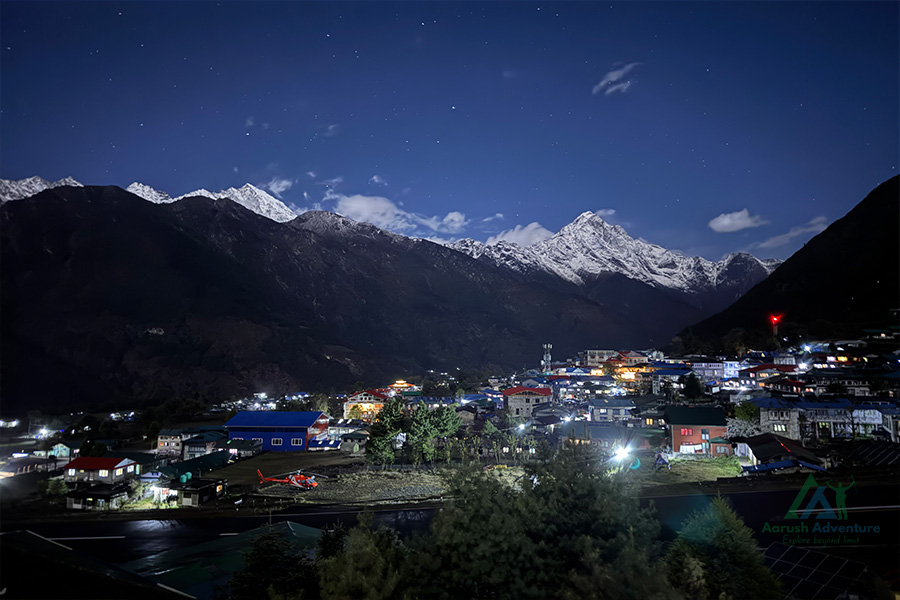
Early in the morning, you’ll board a thrilling flight to Lukla, the gateway to the Everest region. Lukla is famous for its small airport, perched high in the mountains, and the flight itself is an adventure with amazing views. Once in Lukla, the real trekking begins! The trail to Phakding is a short 3-4 hour trek, taking you through beautiful landscapes of green valleys, forests, and river crossings. The fresh mountain air will fill your lungs, and the stunning views of the surrounding peaks will leave you in awe. Phakding is a small village where you’ll rest for the night. It’s the perfect place to relax and take in the serene beauty of the Himalayas. The journey has just begun, and every step brings you closer to the majestic Mount Everest!

  • Tea houses
  • breakfast, lunch and dinner
  • 35 min Flight and 3-4 hour walk
  • 8 km
  • Ascent: 100 m
  • Descent: 250 m

Get ready for an exciting adventure on this day as you set out for an 11 km trek to Namche Bazaar. This is a challenging day, but it’s filled with rewards along the way. The route is a bit steep, so you’ll feel the effort, but as you climb higher, the landscape around you changes beautifully. You’ll pass through villages, cross small bridges, and gain altitude steadily. By the time you arrive at Namche Bazaar, the Sherpa heart of the Everest region, you’ll have earned your first majestic glimpse of the world’s highest peak – Mount Everest. It’s the kind of view that leaves you breathless in more ways than one.

  • Tea houses
  • breakfast, lunch and dinner
  • 6-7 hour walk
  • 13 km
  • Ascent: 850 m
  • Descent: 100 m

Today is a special day because you’ll rest and let your body adjust to the higher altitude. This is called acclimatization, and it’s super important to make sure you’re safe and strong for the upcoming trek. While you rest, Namche Bazaar is yours to explore. Wander through the vibrant market, where local Sherpa culture comes alive through the shops, food, and friendly faces. You can also learn about the area’s history and culture by visiting local museums. If you’re up for a little more adventure, you’ll take a short trek to the Everest View Hotel. This hike is just 6 km, but it’s worth every step because the views are absolutely breathtaking. From here, you’ll see not just Everest but also the surrounding peaks, each one more majestic than the last. It’s a moment that’ll stay with you forever.

  • Tea houses
  • breakfast, lunch and dinner
  • 4-5 hour walk
  • 10 km
  • Ascent: 560 m
  • Descent: 560 m

You’ll take a 5-6 hour trek through forests filled with colorful rhododendron flowers. As you walk, the peaceful sounds of nature accompany you, and you’ll cross the sparkling Dudh Koshi River along the way. The trail gradually climbs as you approach the village of Tengboche, but don’t worry – the views along the route are more than enough to keep you motivated. Once you arrive in Tengboche, you’ll be greeted by the iconic Tengboche Monastery. This monastery, perched on a hill, is one of the most important spiritual sites in the region. The peaceful atmosphere, the sound of chanting monks, and the beautiful surrounding scenery make this a memorable stop on your journey.

  • Tea houses
  • breakfast, lunch and dinner
  • 5-6 hours walk
  • 12 km
  • Ascent: 850 m
  • Descent: 300 m

You’ll start your journey with an exciting 5-6 hour trek through lush alpine meadows and charming Sherpa villages. As you walk, the air begins to get thinner, and the scenery grows more breathtaking. You’ll feel the cool mountain breeze and marvel at the landscapes unfolding around you. Along the way, you’ll cross over small bridges and pass by quaint villages where the Sherpa people live, offering a glimpse into their mountain life. Eventually, you’ll arrive at Dingboche, a welcoming village nestled at 4,410 meters. Dingboche is an ideal place for acclimatization, which helps your body adjust to the high altitude. The views here are simply stunning, with towering peaks surrounding you from every direction. The peaceful atmosphere is perfect for resting and soaking in the beauty of the Himalayas.

  • Tea houses
  • breakfast, lunch and dinner
  • 5-6 hour walk
  • 10 km
  • Ascent: 700 m
  • Descent: 100 m

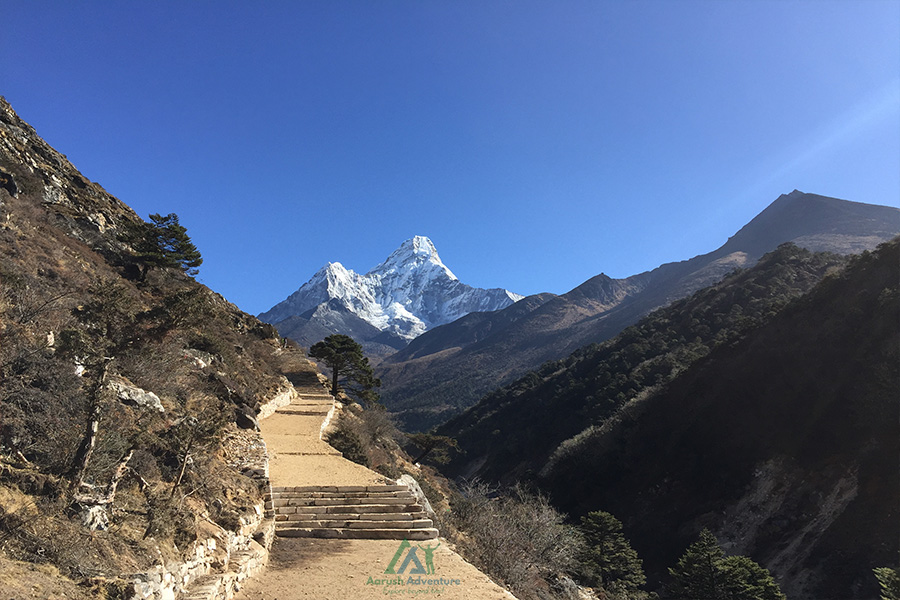
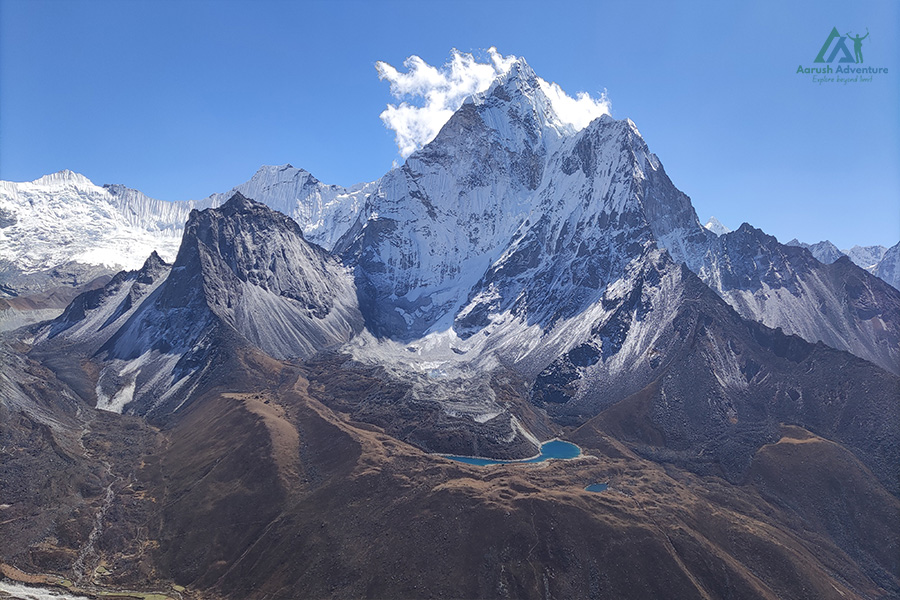
After a restful night in Dingboche, today is all about helping your body adjust to the altitude. You’ll embark on a 5-6 hour hike up to NankarTshang, located at 5,100 meters. This is an acclimatization hike, meaning the goal is not to rush but to let your body adjust while enjoying the incredible surroundings. The trail is steep, but don’t worry—your effort will be richly rewarded with spectacular views of some of the most famous mountains in the world. As you reach the top, you’ll see Ama Dablam, Lhotse, and many other towering peaks spread out in front of you, making the climb worth every step. Once you’ve had your fill of the stunning vistas, you’ll make your way back down to Dingboche to rest for the night, feeling proud of the progress you’ve made.

  • Tea House
  • breakfast, lunch and dinner
  • 5-6 hour walk
  • 7 km
  • Ascent: 650 m
  • Descent: 650 m

You’ll continue your trek with a 5-6 hour journey to Lobuche, a high-altitude village located at 4,910 meters. The trek today takes you across moraine landscapes, where the rugged terrain reminds you of the power of nature. You’ll pass through Thukla Pass, a special place where many climbers honor their loved ones who have passed away on Everest. The trail offers more beautiful views of the surrounding peaks, making every step feel meaningful. As you reach Lobuche, you’ll be surrounded by magnificent mountain views, and you’ll have a sense of accomplishment for making it this far. This stop will allow you to rest and prepare for the exciting days ahead, as the Himalayas continue to reveal their splendor with each passing moment.

  • Tea houses
  • breakfast, lunch and dinner
  • 5-6 hour walk
  • 8 km
  • Ascent: 650 m
  • Descent: 70 m

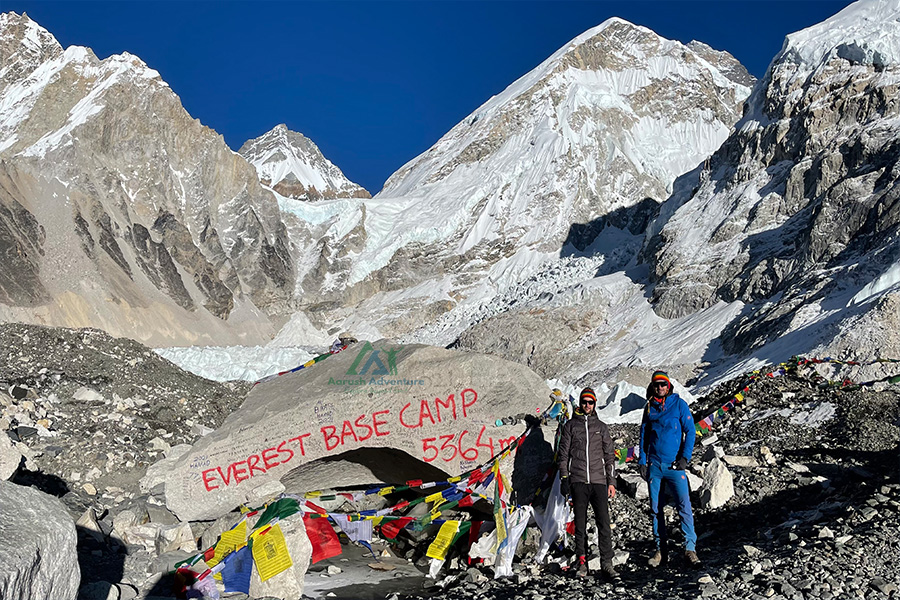
The day begins early as you lace up your boots and step onto the rugged, windswept trails of the Himalayas. Today’s goal is Everest Base Camp, one of the most iconic places on Earth, where brave climbers from all over the world prepare for the ultimate ascent to Mount Everest’s summit. The trek is about 8 hours long, and with every step, you get closer to the heart of the world’s highest mountain. As you approach the base camp, the breathtaking views of towering peaks and glaciers unfold before you. You’ll stand in awe, knowing that this is where countless adventures and epic challenges begin. After soaking in the atmosphere and taking some time to rest and explore, you make your way back down the trail to Gorekshep, a small village perched at 5181 meters, where you’ll spend the night under the vast Himalayan sky.

  • Tea houses
  • breakfast, lunch and dinner
  • 7-8 hours walk
  • 11 km
  • Ascent: 500 m
  • Descent: 200 m

An early start this morning takes us to kalapathar, the famous viewpoint offering the most incredible sunrise view of the Everest region. witness the first rays of light illuminating the majestic mountains before we head back for breakfast. from there, its an easy trek to lobuche , where we will rest and prepare for the final pass of our journey.

  • Tea houses
  • breakfast, lunch and dinner
  • 5-6 hour walk
  • 7 km
  • Ascent: 450 m
  • Descent: 670 m


Today is the day! we will cross the pass, Kongma la,  the journey involve a technical crossing of the khumbu glacier followed by a rocky ascent to the top. the reward is magnificent view, particularly of Mt. Makalu (8463m). after descending, we will trek along the banks of the stunning kongma la lake and continue to the village of chhukung, known as the gateway to the famous Island peak. we will spend night here to prepare for coming adventure.

  • Tea houses
  • breakfast, lunch and dinner
  • 7-8 hour walk
  • 12.9 km
  • Ascent: 650 m
  • Descent: 860 m

To adapt to the high altitude and ensure safety, we dedicate this day to acclimatization in Chhukung. Resting helps our bodies adjust, reducing the risk of altitude sickness. During the day, our Sherpa guide will conduct a training session, teaching us essential climbing techniques, such as using ice axes, boots, and crampons. This preparation is crucial for building confidence and ensuring success in the next phase of our journey.

  • Tea houses
  • breakfast, lunch and dinner
  • 4-5 hour walk
  • 6 km
  • Ascent: 800 m
  • Descent: 800 m

We begin our trek from Chhukung, heading toward Island Peak Base Camp. The route takes us along the moraine of the Lhotse Glacier, and while the trek is demanding, it is incredibly rewarding. As we ascend steadily, we reach our campsite at 5,200 meters, where we will spend the night. Upon arrival, we’ll take part in a short training session to practice our climbing techniques. This session is designed to reinforce our skills and prepare us for the upcoming summit attempt, ensuring we’re feeling confident and well-prepared.

  • Camping
  • breakfast, lunch and dinner
  • 4-5 hour walk
  • 5 km
  • Ascent: 800 m
  • Descent: 50 m

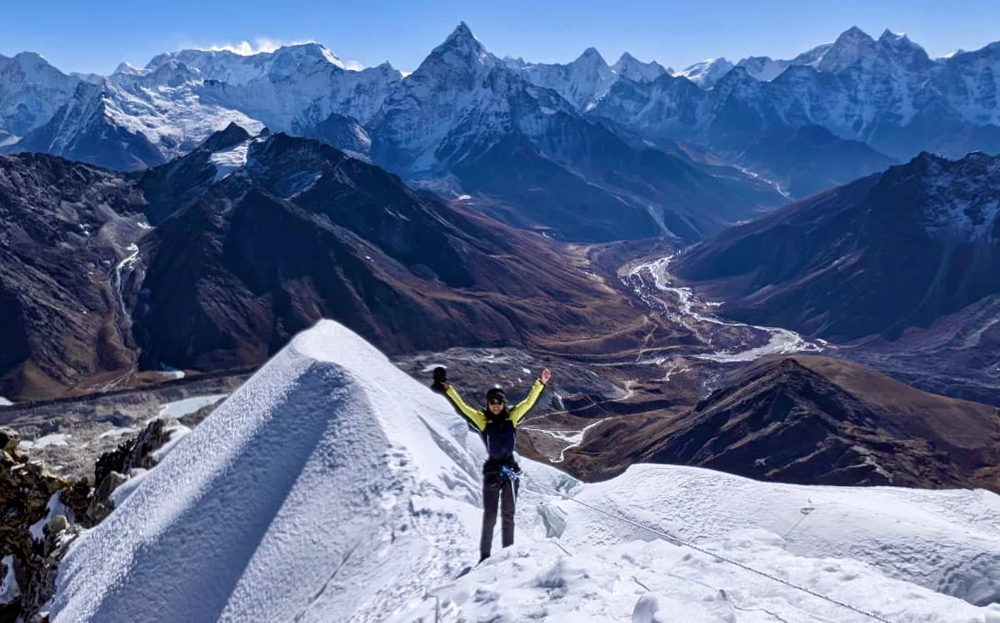
We begin our journey very early in the morning to reach the summit of Island Peak. The climb itself is challenging, but the incredible views of some of the world’s highest mountains, including Everest, Lhotse, Makalu, and Island Peak, make the effort worthwhile. After spending some time at the top to take in the breathtaking scenery and celebrate our success, we will carefully descend back to Chhukung. The round trip will take us about 10 to 11 hours, requiring stamina and focus. We will arrive back in Chhukung exhausted but exhilarated by the achievement.

  • Tea houses
  • breakfast, lunch and dinner
  • 9-10 hour walk
  • 13 km
  • Ascent: 700 m
  • Descent: 1300 m

After attempting the summit, we start heading back down to Tengboche, retracing the route we previously took. The trek will take about 6 hours to cover the 12.9 km. Once we arrive in Tengboche, we’ll visit the famous Tengboche Monastery, a major cultural and spiritual site in Sagarmatha National Park. The monastery provides stunning views of the surrounding mountains, making it a peaceful and scenic stop on our journey.

  • Tea houses
  • breakfast, lunch, and dinner
  • 5-6 hour walk
  • 13 km
  • Ascent: 100 m
  • Descent: 900 m

Today’s trek to Monjo will be a journey of more ups and downs. we will pass through lush, green landscapes and the beautiful views of majestic peaks. we will make a stop in Namche Bazaar for one last chance to shop or grab a coffee before continuing your descend to the village of Monjo.

  • Tea houses
  • breakfast, lunch, and dinner
  • 5-6 hour
  • 15 km
  • Ascent: 400 m
  • Descent: 1200 m

Today, you will retrace your journey back to lukla, feeling a sense of accomplishment for having conquered your destiny along the same trail. to celebrate your successful trek and last evening in the Himalayas, you will enjoy a farewell dinner with your trekking crew. this is perfect opportunity to share drinks and meals, give them a well- deserved tip, and celebrate with singing and dancing together.

  • Tea houses
  • breakfast, lunch, and dinner
  • 4-5 hour walk
  • 13 km
  • Ascent: 150 m
  • Descent: 350 m

Today, you will take a scenic 35- minute flight back to Kathmandu from Lukla. this flight gives you one last opportunity to enjoy breathtaking views of the Himalayas from above. after arriving in Kathmandu, you can check into your hotel and finally relax and enjoy the comforts of civilization.

  • 3 Star Hotel
  • breakfast
  • 35 min flight and 20 min drive

This day is for reserve, in case of flight cancel. you can relax, Massage and Final Shopping before departure to Home.

  • 3 Star Hotel
  • breakfast

On your Final day, we will arrange your transfer to Tribhuvan International airport based on your flight schedule. as you prepare for your departure, take a moment to bid farewell to Nepal, carrying with you the cherished memories of your incredible Island Peak climbing and unforgettable Himalayan Adventure.

See you next time for next Adventure!

Namaste!

  • breakfast
Altitude Chart

Our team guides, porters and accompanying staff are locals with a broad knowledge about each and every location that we travel through.

Cost Includes
  • Airport pickups and drops during international arrivals/departures in private vehicles
  • 4x nights 3-Star hotel accommodation in Kathmandu with breakfast, welcome, and farewell dinner
  • One-night accommodation in the campaign tent at Island Peak Base Camp
  • All ground transportation as per the itinerary by private vehicles
  • Services of English-speaking, trained, and experienced staff, including trekking guide (leader), expedition guide (leader), and necessary porters
  • Crew team’s daily salary, insurance, equipment, food, and accommodations
  • Kathmandu-Lukla-Kathmandu round trip flight fare or Ramechhap-Lukla-Ramechhap during peak season
  • Welcome dinner in a traditional Nepali restaurant with a cultural performance in Kathmandu
  • Full board meals (breakfast, lunch, and dinner), 3x tea/coffee, and 1x soup per day during trekking and climbing
  • Seasonal fruits (e.g., apples and pomegranates) as dessert during the entire trekking and climbing
  • Porter service during trekking (1 Porter for 2 clients)
  • All necessary paperwork: TIMS Card, Local Trekking Permit, Island Peak Climbing Permit, and Sagarmatha National Park Permit
  • Good quality tents and kitchen utensils for camping at Island Peak Base Camp
  • Trekking duffel bag provided by Everest Adventures Nepal
  • Group mountaineering (climbing) equipment such as fixed rope and ladder (if required)
  • Medical kit carried by your trekking/climbing leader
  • Trip accomplishment certificate at the end of the trip
  • Best available twin-sharing lodge-to-lodge accommodation during the trek
  • Boiled water provided during the climb
  • General climbing equipment such as rope, ice screw, snow bar, etc.
Cost Excludes
  • Meals not specified in the ‘Meal Inclusions’ section of the itinerary: Any meals outside the listed inclusions will be at your own expense.
  • Travel Insurance: It is highly recommended that travelers secure comprehensive travel insurance, including coverage for trekking, medical emergencies, and cancellations.
  • International Airfare: The cost of flights to and from Nepal is not included. Travelers are responsible for booking and covering their own international airfare.
  • Nepal Entry Visa: Travelers are required to obtain a visa for entry into Nepal. The cost of the visa is not included and must be arranged upon arrival or in advance.
  • Hot Showers During the Trek: While trekking, hot showers are not always available and may require an additional charge where applicable. Please be prepared for basic shower facilities.
  • All Kinds of Cold Drinks: Beverages such as bottled water, soft drinks (Coke, Fanta, Sprite), juice, and other cold drinks are not included in the trip cost and should be purchased separately.
  • Personal Trekking Equipment: Essential trekking gear such as backpacks, sleeping bags, trekking poles, footwear, and other personal items must be arranged by travelers themselves.
  • Tips for Trekking Staff and Driver: Tipping is customary for the trekking crew, including guides, porters, and drivers. While tips are not mandatory, they are greatly appreciated for exceptional service.
Departure Dates
  • We have daily departures for this trip from March to May and from mid-September to mid-December. You can type in the number of passengers to book a reservation and select a date that is convenient for you. Due to group size, we never cancel a trip once you’ve made a reservation. If you would rather join the group, we will add more travelers on the selected date. You can let us know once you make a reservation or earlier.
Useful Info

OXYGEN SATURATION

1. Mountaineering Gear

Ice Axe – Lightweight for glacier travel
Crampons – 12-point, compatible with mountaineering boots
Climbing Harness – Adjustable, lightweight
Ascender (Jumar) – For fixed rope sections
Belay Device – ATC guide or similar for rappelling
Carabiners – 2 locking, 2 non-locking
Climbing Helmet – Lightweight and durable
Trekking Poles – Adjustable for hiking and stability


2. Mountaineering Boots

Double Mountaineering Boots – Insulated boots like La Sportiva G2 SM or Scarpa Phantom 6000
Gaiters – Waterproof to keep snow out of boots


3. Clothing

Base Layers

Thermal Tops & Bottoms – Moisture-wicking merino wool or synthetic

Insulation Layers

Fleece Jacket & Pants – Mid-layer for warmth
Down Jacket – Expedition-grade (800-fill or higher)
Down Pants – For higher altitudes

Outer Layers (Shell Clothing)

Waterproof Jacket – Gore-Tex or equivalent, windproof and breathable
Waterproof Pants – Gore-Tex or similar with full side zips

Gloves & Mittens

Liner Gloves – Lightweight for warmth and dexterity
Insulated Gloves – Waterproof and windproof
Mittens – Heavy-duty for summit push

Headwear

Warm Hat – Fleece or wool
Balaclava/Buff – Protects face from cold and wind
Sun Hat – Wide-brim for lower altitudes
Sunglasses – Category 4 UV protection
Ski Goggles – Anti-fog for summit day


4. Sleeping Gear

Sleeping Bag – Rated for -20°C to -30°C
Sleeping Pad – Insulated foam or inflatable pad


5. Personal Equipment

Backpack (40-50L) – For carrying gear to high camp
Duffel Bag (100L+) – For transporting gear
Headlamp & Extra Batteries – Bright LED headlamp
Water Bottles (Nalgene) – 2-3 liters capacity
Thermos Flask – Keeps water warm in extreme cold


6. Safety & Technical Gear

First Aid Kit – Personal medications, blister care, altitude sickness meds
Satellite Phone/GPS – Emergency communication
Multi-tool/Knife – Useful for various tasks


7. Food & Hydration

Energy Snacks – Energy bars, nuts, dried fruits
Electrolyte Powders – To maintain hydration


8. Miscellaneous Items

Toiletries – Toothbrush, toothpaste, wet wipes, biodegradable soap
Sunscreen (SPF 50+) – For UV protection
Lip Balm (SPF 30+) – Prevents chapping


Packing Tips:

Layering is key – Adjust clothing according to altitude and weather
Test your gear – Ensure proper fit before the trip
Pack smart – Keep summit essentials in an easy-to-reach place

FAQs
  • Island Peak, also known as Imja Tse, is a popular trekking peak located in the Everest region of Nepal. The peak is situated at an altitude of 6,189 meters (20,305 feet) and offers stunning views of nearby peaks like Lhotse, Makalu, and Cho Oyu. The key locations along the route include Lukla, Namche Bazaar, Tengboche Monastery, Dingboche, Chhukulung etc. Trekkers will pass through beautiful Sherpa villages, and alpine forests.

  • The highest altitude of Island Peak is 6,189 meters (20,305 feet). To prepare for altitude sickness, it’s essential to ascend gradually and give your body time to acclimatize. Trekking slowly and staying hydrated helps mitigate altitude sickness. The best way to acclimatize is by spending extra days at higher altitudes (e.g., Dingboche or Chhukung) to allow your body to adjust before reaching higher elevations. It’s also crucial to recognize symptoms early and descend if necessary.

  • Island Peak Climbing requires a moderate level of fitness and some previous trekking experience. While the trek itself is challenging due to the altitude and technical sections, it is suitable for trekkers with a reasonable fitness level and basic mountaineering skills, such as the ability to use crampons and an ice axe. The final ascent involves steep sections of ice and rock climbing, making it a challenging but achievable peak for those with determination.

  • The best times to climb Island Peak are pre-monsoon (March to May) and post-monsoon (September to November). These months offer stable weather and clear skies, providing excellent views of the surrounding peaks. You should prepare for cold temperatures, high winds, and the possibility of snowfall. Packing proper clothing and gear to handle freezing temperatures and fluctuating weather conditions is essential.

  • Accommodation along the Island Peak route ranges from teahouses in the lower sections to basic lodges higher up. The teahouses offer simple rooms with shared facilities, while at base camp, we will arrange a camping stay in tents. Expect basic comfort with limited amenities, such as shared bathrooms and simple meals. However, as you ascend to higher altitudes, the facilities become more basic, and your comfort may be further limited due to the altitude.

  • Cash should be carried in Nepalese rupees, as ATMs are available in Namche Bazaar, but few places beyond that. Charging facilities are available in the lower sections (like Namche and Tengboche), though they may be limited or require a fee. Wi-Fi is available in some teahouses, though the connection can be slow. It’s also advisable to carry a power bank for charging your devices.

  • There are basic medical facilities in Namche Bazaar and a few other villages, but for serious medical emergencies, evacuation to Kathmandu is necessary. Guides and porters are usually equipped with basic first-aid supplies and are trained to handle altitude sickness and minor injuries. In case of an emergency, the guide will coordinate with local rescue teams for evacuation.

  • The Everest region is rich in Sherpa culture and Buddhist traditions. Respect local customs, especially in monasteries and sacred sites. Tengboche Monastery, located on the route, is a significant religious site, and trekkers are encouraged to visit and respect the spiritual practices there. It’s important to ask for permission before taking photographs in sacred places and to dress modestly when visiting monasteries.

  • The region is home to diverse wildlife, including the Himalayan tahr, musk deer, and the endangered snow leopard. You may also see a variety of bird species such as the Himalayan griffon vulture and pheasants. The natural beauty is spectacular, with views of snow-capped peaks, glaciers, and alpine meadows. Ethical guidelines include minimizing your environmental impact by not leaving waste behind, respecting wildlife, and following Leave No Trace principles.

  • Staying safe during Island Peak Climbing involves being cautious on the trek, particularly when crossing glaciers or climbing steep sections. It’s essential to follow the guide’s instructions regarding the use of climbing equipment. In case of an emergency, the guide will coordinate with rescue services for evacuation via helicopter or other means. Travel insurance covering high-altitude rescue is highly recommended.

  • The success rate for summiting Island Peak is relatively high, with most climbers reaching the summit if they are properly acclimatized and physically prepared. Factors such as weather conditions, altitude sickness, physical fitness, and the skill of the climber can affect reaching the summit. Climbers who are adequately prepared and follow the guide’s instructions have a strong chance of success.

  • Essential personal gear for Island Peak includes trekking boots, crampons, an ice axe, a harness, climbing gloves, a sleeping bag (suitable for cold temperatures), and insulated clothing. Also, bring a headlamp, trekking poles, sunscreen, a water bottle, and a camera for capturing the incredible scenery. For summit day, you will need gear such as a helmet and a rope, which are often provided by Everest Adventures Nepal, your agency in Nepal.

You May Also LikeSimilar Itineraries
Everest Luxury Trek Featured
Everest Luxury Trek
Difficulty: Easy 10 Days
Max. Height: 4000

US $5499

Everest base camp and Gokyo lake Trek
Difficulty: moderate to challenging 19 Days
Max. Height: 5500

US $2099

Everest Three Passes Trek Featured
Everest Three Passes Trek
Difficulty: moderate to challenging 21 Days
Max. Height: 5550

US $2199

Gokyo Lake Trek
Gokyo Lake Trek
Difficulty: modorate to Challenging 16 Days
Max. Height: 5380 meter

US $1799

Everest Base Camp Trek
Difficulty: Challenging 17 Days
Max. Height: 5550 meter

US $1999

Lobuche Peak Climbing Featured
Lobuche Peak Climbing
Difficulty: Moderate to STRENUOUS 18 Days
Max. Height: 6119m

US $3199